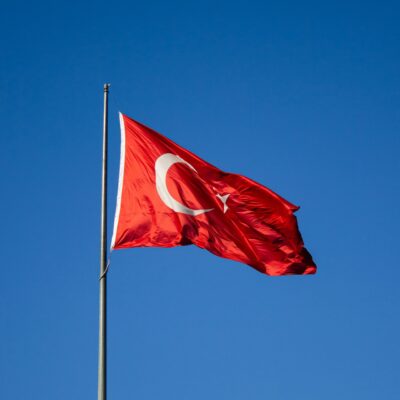


Turkey is a center that attracts people from all over the world with its history, culture, and, most importantly, its location. With its continuously appreciating structure, it is an extremely suitable country for people who want to invest, study, or start a new life. However, for those planning to stay in Turkey longer than the visa exemption period (usually 90 days), the most important requirement is legal status. The foundation of this legal status is obtaining a residence permit in Turkey.
Residence permits in Turkey are regulated under the Law on Foreigners and International Protection (YUKK), Law No. 6458. The process may seem difficult and bureaucratic at first glance. Different permit types, constantly updated legal requirements, and deadlines to be aware of can be challenging for applicants. If you want to get a Turkish residence permit, get ready to meet your biggest supporter…
İçindekiler
Introduction: Understanding the Turkish Residence Permit System
Turkey’s residence permit system has a legal framework that varies according to the foreigner’s purpose of stay in the country. This system is managed by the Migration Office, and all applications are processed through this center.
The first thing you need to determine to understand the system is your purpose of stay. Why you have come to Turkey and how long you will stay here directly determines which permit type you must apply for. Your purpose of stay directly determines this. From a touristic extension to marriage with a Turkish citizen; from real estate investment to university education, there is a different residence permit category and specific conditions for each scenario.
The purpose of this system is to ensure the registration of foreigners legally residing in Turkey, to protect public order, and at the same time, to guarantee their legal rights (such as access to education and health services). Applying for the correct permit type is not only a legal obligation but also necessary for you to seamlessly continue your daily life in Turkey (opening a bank account, utility subscriptions, renting property).
Who Needs a Residence Permit and Why It’s Important
A foreigner who comes to Turkey with a visa or visa exemption and wishes to stay longer than this period must, without exception, obtain a residence permit in Turkey. So, who needs this permit?
- Tourists who want to continue staying in Turkey by exceeding the 90-day period.
- Those who enroll in a university, language school, or other educational institution in Turkey.
- Individuals who are starting a business, developing commercial connections, or purchasing real estate in Turkey.
- Those who are married to a Turkish citizen or a foreigner with a legal residence permit in Turkey, or their dependent children.
- Academics who come to Turkey for scientific research.
- Individuals who see Turkey as their second home and wish to spend a large part of the year here.
Why It’s Important?
A residence permit is a legal shield that prevents you from falling into an illegal or visa violation status in Turkey. A visa violation can lead to heavy fines, deportation orders, and entry bans to Turkey for certain periods. Moreover, the residence card Turkey is your official identification in Turkey. Without this card:
- You cannot open a bank account.
- You cannot get electricity, water, internet, or natural gas subscriptions in your name.
- You may face legal difficulties when renting a home.
- You cannot enroll your children in public schools.
In other words, a residence permit is a necessity for establishing a legal and stable life in Turkey.
Types of Residence Permits in Turkey
Turkish legislation has various types of residence permits that serve different purposes of stay. Choosing the right permit type is essential for your application to be successful. The most frequently preferred Turkish residence permit types are:
Short-Term Residence Permit: Eligibility and Purposes
The short-term residence permit is the most frequently preferred application type and is generally issued for periods of one or two years. It is regulated under Articles 31-33 of the YUKK. Its main sub-categories and eligibility requirements are as follows:
Touristic Purposes (Article 31/1-e)
The touristic purpose permit is the most common type. It is granted to foreigners who wish to extend their 90-day visa period. The applicant must declare their touristic plan and sufficient financial means. However, as of January 1, 2020, extensions for touristic residence permits for the same person have been restricted.
Real Estate Owners (Article 31/1-b)
There is a permit granted to foreigners who own residential real estate in Turkey. This permit is also known as a property-based residence permit.
Those Establishing Commercial Relations or a Business (Article 31/1-a)
It is granted to individuals who will establish a company or participate in a commercial activity in Turkey (with documents such as an invitation letter from the company, etc.).
In-Service Training (Article 31/1-c)
It is granted to those who will participate in an internship or in-service training program at an institution in Turkey.
Those Receiving Medical Treatment (Article 31/1-g)
It is granted to individuals coming to Turkey for medical treatment (provided they obtain a document from the hospital).
Turkish Language Courses (Article 31/1-f)
It is granted to individuals who will receive Turkish language education from authorized institutions like TÖMER.
Family Residence Permit: Reunification Conditions
The Family Residence Permit (YUKK Articles 34-37) aims to protect family unity in Turkey. In this permit type, there is a sponsor and an applicant. The conditions are as follows: The sponsor must have sufficient income, have valid health insurance covering all family members, and reside at an address registered in the Address Registration System.
- The marriage must not be fraudulent.
- If applying for a child, the child must be dependent.
Student Residence Permit: Requirements for International Students
The Student Residence Permit (YUKK Articles 38-41) is granted to foreigners who will study at a higher education institution in Turkey (associate, undergraduate, graduate, doctorate). The requirements are as follows:
- An “Acceptance Letter” from a university in Turkey.
- Valid health insurance covering the duration of the education.
- A financial declaration showing they can support themselves during their education.
Long-Term Residence Permit: Path to Permanent Residency
The Long-Term Residence Permit (YUKK Articles 42-45) provides a permanent status in Turkey and is granted indefinitely. This permit is also known as a permanent residence permit. The requirements are as follows:
- To have resided in Turkey with a residence permit for at least eight (8) continuous years (half of the time spent on a student permit is counted).
- Not to have received social assistance in the last three years.
- To have a sufficient and regular source of income.
- To have valid health insurance.
- Not to pose a threat to public order or public security.

Humanitarian Residence Permit
The Humanitarian Residence Permit (YUKK Articles 46-47) is granted when the conditions for other residence permits are not met, but the person’s stay in Turkey is mandatory. For example, it is considered for those where the best interest of the child is concerned, for those who cannot be deported, or for those who cannot leave the country for urgent medical reasons.
Residence Permit for Victims of Human Trafficking
The Residence Permit for Victims of Human Trafficking (YUKK Articles 48-49) is a special status granted to individuals who are identified as victims of human trafficking or where there is strong suspicion of it.
Worried about application refusal?
Talk to our lawyers before reapplying!
Step-by-Step Application Process
Regardless of which permit type you apply for, the basic procedure you must follow is largely similar. The process is integrated with technology and is carried out via the e-ikamet application system.
-
Gathering Required Documents
The foundation of your application is the accuracy and completeness of the documents you gather. A missing document can lead to the direct rejection of your application. Although the required documents vary by application type, the standard documents requested are:
- A passport valid for at least 60 days longer than the residence permit duration you are applying for, and photocopies of the passport’s identity information and entry-exit stamp pages.
- 4 biometric photos with a white background, adhering to ICAO standards, taken within the last 6 months.
- A private health insurance policy valid in Turkey that covers the application period (or GSS/provision document).
- A document proving you are staying at a legal address in Turkey is required. This document can be a notarized rental agreement, a photocopy of the title deed (if you are the owner), or a notarized letter of undertaking if you are staying with a Turkish citizen.
- A document showing you can support yourself financially in Turkey during the application period is required (e.g., bank statement, pension document).
- The online application form, filled out and signed via the e-ikamet application system, is required.
2. Obtaining Valid Turkish Health Insurance
Getting health insurance is one of the most important procedures. Travel insurance used when entering with a tourist visa is not accepted for residence permit applications.
To obtain a residence permit in Turkey, you are required to purchase a “private health insurance” policy from an established insurance company in Turkey, which is specifically designed for residence permit applications and covers the minimum specified collateral. This policy must cover the entire duration of the residence permit you are applying for.
Students have the option to get GSS (General Health Insurance) through their universities. For family residence permits, the sponsor’s GSS may cover the entire family.
3. Making the Online Application (e-İkamet)
All residence permit applications in Turkey (first-time, extension, transfer) are made only and exclusively through the official website of the Directorate of Migration Management, e-ikamet.goc.gov.tr. The e-ikamet application system process is as follows:
- Log in to the website and click the “I am Making a First-Time Application” or “I am Making an Extension Application” option.
- Enter your personal information (passport, ID) without errors.
- Fill in your contact information and your address in Turkey completely.
- Enter your health insurance policy information.
- Select your application type (e.g., “Short-Term – Tourism” or “Short-Term – Immovable Property”).
The system will assign you a suitable appointment date and time at the Göç İdaresi (Migration Office) based on the information you provided.
After completing everything, the system will generate a PDF application form for you, containing a list of all necessary documents and your appointment details. You must print and sign this form.
Warning: Do not trust or share your personal information with any intermediary company’s website other than the official site.
4. Attending the Appointment at the Migration Office
You must be present in person at the relevant provincial or district Migration Office directorate on the date and time of the appointment you received through the e-ikamet application system.
When going to the appointment:
- Have the originals and one photocopy of all the documents you prepared with you.
- Bring the application form you signed.
- Bring the receipts showing you have paid the necessary fees (this payment can be made at the tax office or online before the appointment).
The migration specialist will check your documents, review them for any deficiencies, and take your fingerprints. If your documents are complete, your application will be taken into the “evaluation” process.
5. Evaluation Period and Receiving the Permit Card
After you complete your appointment, your application officially enters the evaluation stage. Migration Office specialists review your documents, conduct a security check, and make a final decision on your application.
The legal evaluation period is a maximum of 90 days. During this time, you can legally stay in Turkey with the Application Document given to you at the appointment.
When your application is approved:
- The Directorate of Migration Management will print a residence card Turkey in your name.
- This card will be mailed via PTT (Turkish Postal Service) to the address you declared in the e-ikamet application system.
You can track the status of your application on the Directorate of Migration Management’s website or by calling the YİMER (Foreigners’ Communication Center) hotline at 157. Managing this process with Fatih Durak & Partners Law Firm can help you successfully complete the necessary legal procedures.
Application Requirements: Key Conditions You Must Meet
Regardless of your application type, there are basic legal conditions (YUKK Article 15) that the Directorate of Migration Management seeks in every applicant. Failure to meet even one of these conditions will result in the direct rejection of your application:
- You must have sufficient and regular financial means to support yourself (and your family, if any) during your stay in Turkey.
- You must reside at an address in Turkey that complies with general health and safety standards.
- You must have valid health insurance.
- You must have entered Turkey through legal means.
- Your passport must be valid for at least 60 days longer than the requested residence period.
- You must not be considered a threat to public order or public security.
- There must not be an entry ban to Turkey against you.
Residence Permit by Property Purchase
Obtaining a residence permit through real estate investment in Turkey is one of the most attractive options for foreign investors. This permit falls under the short-term residence permit category (Article 31/1-b) but is a special type with its own rules.
Unlike the general touristic permit, the property-based residence permit provides an easier residence permit renewal process as long as you own the property.
Minimum Property Value and Required Documents
The rules for obtaining a residence permit through investment have been tightened over time. To apply for a property-based residence permit by purchasing real estate in Turkey, the value of the purchased residence must be:
At least 200,000 USD (US Dollars) or its equivalent property
Important Distinction: These amounts are for the residence permit in Turkey. The minimum real estate investment amount required for Turkish Citizenship is 400,000 USD. These two programs should not be confused.
Required Additional Documents:
- Current Title Deed (Tapu Senedi) showing the property is a residence.
- ” Numbering Certificate or Residence Registration Document obtained from the Title Deed Directorate.
- Appraisal Report showing the minimum value of the real estate.
- Mandatory Earthquake Insurance (DASK) policy.
Renewing or Extending Your Residence Permit: Timing and Documents
Your residence permit (whether student, family, or short-term) is a temporary document. If you wish to continue staying in Turkey, you must apply for a residence permit renewal before your permit expires.
The extension application must be made within the last 60 days before your current residence permit expires, and in any case, before your permit expires.
Applications made after your permit has expired are not accepted, and you will have to go through the “first-time application” process, which can cause you to lose your legal status.
The renewal process is also done through the e-ikamet application system. The “Extension Application” tab is selected. For extension applications, there is no need to go to an appointment at the Migration Office again; the documents are sent by mail.
Common Reasons for Refusal and Legal Consequences
The refusal of your Turkish residence permit application is a situation with serious legal consequences. Refusal decisions usually stem from the following reasons:
- Missing or Fraudulent Documents
- Invalid Health Insurance
- Insufficient Financial Means
- False Address Declaration
- Purpose of Stay Not Being Clear
- History of Visa Violation
- Public Security Risk (Restriction Code)
When your application is refused, this decision is formally notified to you with a “Notification Document.” This document usually grants you ten days to leave Turkey.
Within these 10 days, you must either leave the country or file a “cancellation lawsuit” against the refusal decision in the Administrative Court. Filing a lawsuit, if done within the legal period, may grant you the right to stay legally.
Work Permit vs. Residence Permit: Can You Work Legally in Turkey?
This is the topic that foreigners confuse the most. The rule is very clear. A residence permit in Turkey does not give you the right to work legally in Turkey. It is illegal to work for a wage at any workplace with a touristic, student, or family residence permit. If detected, both you and your employer will face heavy fines, and your residence permit will be canceled, and a deportation order will be issued for you.
To work legally in Turkey, a Work Permit is required, which must be obtained from the Ministry of Labor and Social Security. A valid Work Permit document also serves in place of a residence permit in Turkey. In other words, if you have a work permit, you do not need to apply for a residence permit from the Migration Office.
New Rules and Updates for 2024 (and Beyond)
Turkey’s migration and residence policies are dynamic and constantly updated. The most notable developments for 2024 and beyond are:
Digital Nomad Visa Opportunities
Turkey, keeping pace with the global remote work trend, has launched the Digital Nomad Visa program. Although this program is not technically a residence permit in Turkey, it is a special visa/status detection document that offers remote workers the opportunity to stay in Turkey legally.
Application Requirements are as follows:
- Be between 21-55 years of age.
- Prove that you work remotely for a company outside of Turkey.
- Document that you have a regular monthly income of at least 3,000 USD (or 36,000 USD annually).
- Possess a university diploma.
This status offers an excellent alternative for remote workers in a period when short-term residence permit applications are restricted.
Investment-Based Residency Changes
As mentioned in the property-based residence permit section above, the most important update is the 200,000 USD minimum value threshold introduced for obtaining a residence permit through real estate acquisition, effective October 16, 2023. This change aims to increase the quality of investment, making it harder to obtain a residence permit through cheap properties, especially in large cities.
Why You Need an Immigration Lawyer: Benefits and Our Expertise
Migration Office legislation is very strict; a small error on a form, a missing signature, or the wrong insurance policy can cause your application to be delayed for months or be rejected outright.
Working with an experienced Immigration Lawyer is not a luxury, but a necessity to protect your investment, your time, and your future in Turkey.
Where Our Expertise Comes In
We analyze your situation and determine the most accurate and least risky Turkish residence permit type for you (Short-Term, Family, Property, Digital Nomad, etc.). We ensure that all necessary documents (insurance, rental agreement, letter of undertaking, bank statements) are complete and compliant with current legislation. We take the burden of document collection off your shoulders.
We complete your application on the e-ikamet application system flawlessly and get your appointment in the most optimized way. If your application is rejected unfairly, we file your cancellation lawsuit with a request for a stay of execution at the Administrative Court within that critical period.
We instantly follow the constantly changing rules (property values, closed neighborhoods, new visa types) and guide you according to these changes.
Conclusion: Key Takeaways and Next Steps
Obtaining a residence permit in Turkey is the best way to benefit from the tremendous opportunities the country offers. The process can be smooth and predictable when managed with proper preparation and legal guidance.
- Your purpose of stay determines your application type.
- The e-ikamet application system is the only official application channel.
- Valid health insurance and proof of legal address are mandatory.
- There is now a minimum investment threshold, such as 200,000 USD, for a property-based residence permit.
- A residence permit in Turkey does not give you the right to work; a “Work Permit” is required for that.
- A refusal decision is not the end of the world, but it requires a swift legal reaction.
Don’t leave your legal process in Turkey to chance. Instead of struggling alone with complex bureaucracy, translation difficulties, or legal uncertainties, benefit from expert guidance.
The firm is ready to support you at every stage of your residence permit in Turkey application to make a legally secure and stress-free start to your new life in Turkey. Contact us to start your process, analyze your situation, and complete your application with confidence. As FD Partners Law Firm, we produce the most detailed solutions for your needs and inform you about the topics you are curious about.